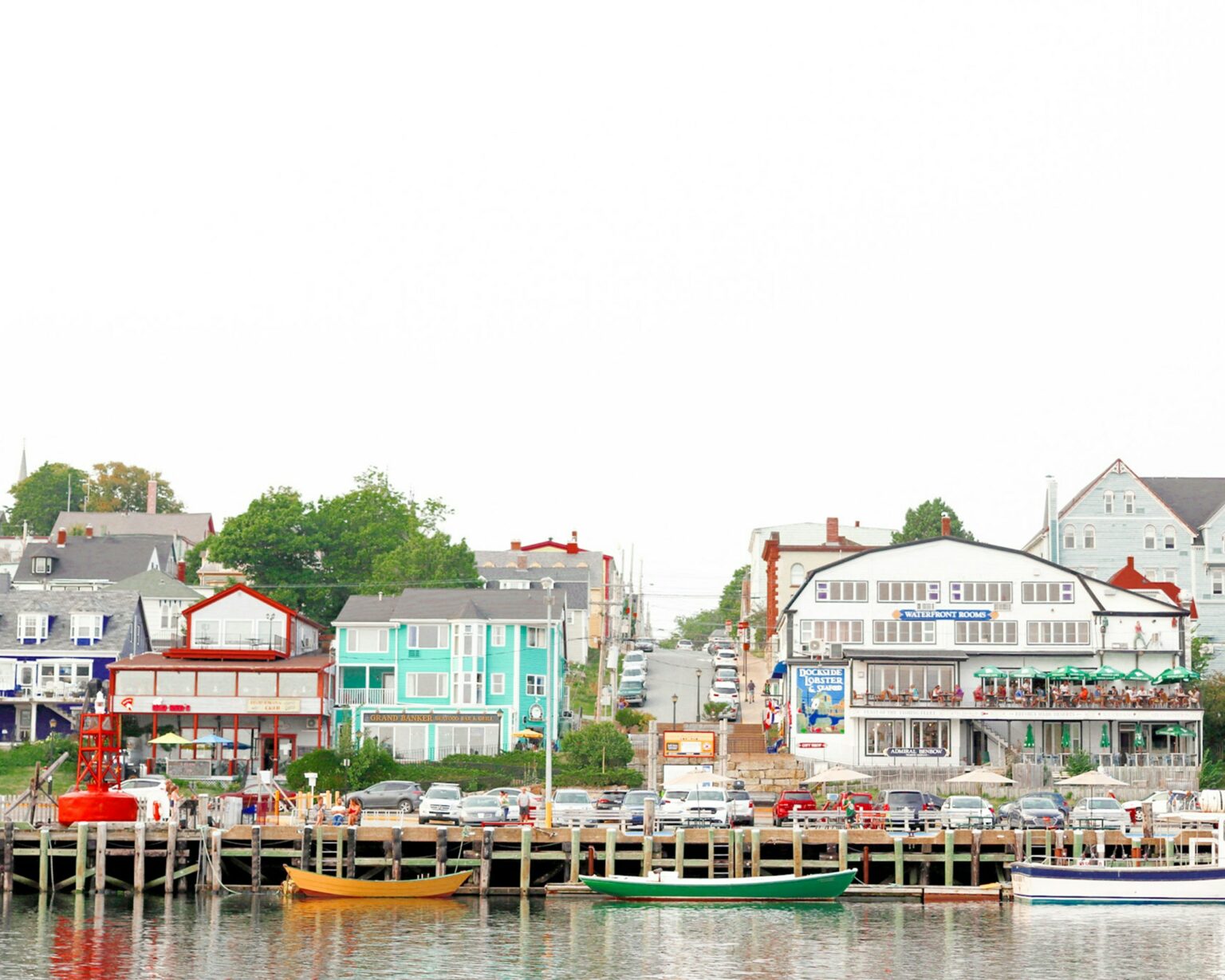
Canada has quietly become one of the most compelling destinations for commercial land acquisition in the developed world. Stable governance, transparent planning systems, and long-term population growth have created conditions that reward patient, land-led investment rather than short-term speculation.
Within this national picture, Nova Scotia has emerged as a standout region. For experienced commercial land acquisition specialists in Canada, the province represents a rare alignment of fundamentals, structural undersupply, and policy-driven growth that is reshaping how institutional and private capital approaches land investment.
This is not a speculative story driven by hype. It is a data-led reality shaped by demographics, infrastructure, and long-term planning constraints, particularly in and around Halifax and the province’s leisure-driven commercial corridors.
What commercial land acquisition actually means in the Canadian context
Commercial land acquisition in Canada is often misunderstood. It is not simply the purchase of vacant land, nor is it short-term development flipping. At its best, it is a strategic discipline focused on securing land that sits at the intersection of future demand, zoning evolution, and economic resilience.
Commercial land acquisition specialists in Canada typically focus on large land parcels capable of phased development, sites with existing or latent commercial income, locations aligned with infrastructure investment, assets where planning uplift can be unlocked over time, and land positioned for leisure, hospitality, mixed-use, or commercial regeneration.
This approach favours investors who understand land cycles rather than housing cycles, and who recognise that value is often created long before a single building is constructed.
Why Nova Scotia has moved to the top of investor shortlists
Nova Scotia’s rise is not accidental. For decades, the province built less housing and commercial infrastructure than population trends required. That underbuilding was masked by slow growth, until the demographic picture changed.
Since the mid-2010s, Nova Scotia has experienced sustained population growth driven by immigration, interprovincial migration, international students, and remote workers relocating from higher-cost markets. Halifax in particular has absorbed much of this growth, placing pressure on housing, hospitality, retail, and leisure infrastructure.
The result is a market where demand has structurally outpaced supply across multiple sectors, not just residential.
For commercial land acquisition specialists in Canada, this imbalance creates opportunity, but only for those who understand how to position land for long-term commercial use rather than short-term residential yield.
The structural undersupply problem, and why it favours landowners
Unlike many overheated global markets, Nova Scotia’s supply constraints are not cyclical. They are structural.
Key factors include long-term underinvestment in purpose-built rental and commercial stock, planning systems not designed for rapid population growth, limited availability of large, development-ready land parcels, and infrastructure lagging behind demographic expansion.
This means that even as construction increases, supply struggles to catch up with demand. From a land acquisition perspective, this favours investors who control land early in the cycle, before full pricing efficiency sets in.
Commercial land acquisition specialists operating in Nova Scotia are therefore less exposed to short-term volatility and more aligned with multi-decade growth trends.
Leisure-led commercial development, an overlooked growth sector
One of the most distinctive aspects of Nova Scotia’s opportunity is the strength of leisure-led commercial development.
The province benefits from strong domestic tourism demand, international recognition for natural beauty, proximity to major North American population centres, and increasing preference for experiential travel and staycations.
As a result, land suitable for golf resorts, holiday parks, eco-lodges, and mixed-use leisure destinations has become increasingly valuable.
For commercial land acquisition specialists in Canada, leisure assets offer a dual advantage. They generate commercial income while land values appreciate, and they remain resilient during broader economic uncertainty, particularly when domestic travel outperforms international tourism.
Why land matters more than buildings in uncertain markets
One of the defining features of professional land acquisition strategy is risk control.
Buildings depreciate, require maintenance, and are sensitive to operational cost inflation. Land, by contrast, is finite. In constrained regions like Nova Scotia, it becomes increasingly scarce as growth accelerates.
Commercial land acquisition specialists focus on land because it carries lower operational risk, allows flexible development timing, captures upside from zoning and planning change, and provides optionality across multiple asset classes.
In Canada’s current environment, where interest rates, construction costs, and labour availability remain volatile, land-led strategies offer a more controlled path to long-term value creation.
Halifax as a commercial anchor, but not the only opportunity
Halifax is undeniably the commercial engine of Nova Scotia. Its port, universities, healthcare sector, and growing technology presence anchor regional growth. However, commercial land acquisition specialists do not limit their focus to the urban core.
Secondary and tertiary locations within Nova Scotia increasingly offer lower entry pricing, larger land parcels, strong regional tourism demand, and less competition for strategic sites.
This is where experienced land specialists outperform generalist investors. Understanding which regions will benefit from infrastructure spillover, tourism flows, and demographic expansion is critical to unlocking value beyond Halifax itself.
Government policy and why it matters for land investors
Nova Scotia’s provincial and municipal governments have introduced a range of initiatives aimed at addressing housing shortages, stimulating development, and attracting inward investment.
While much of the public narrative focuses on residential supply, these policies indirectly support commercial land values by increasing population density, driving infrastructure investment, supporting mixed-use development, and encouraging private capital participation.
Commercial land acquisition specialists in Canada pay close attention to these policy signals. Land acquired ahead of policy implementation often benefits from uplift as planning frameworks evolve to support growth.
The difference between speculative buying and strategic acquisition
Not all land investment is created equal. Speculative buying relies on short-term price movement, often without a clear development or income strategy. Strategic commercial land acquisition is fundamentally different.
It involves detailed planning and zoning analysis, understanding long-term demographic trends, aligning land use with economic demand, and structuring assets for optional exit routes.
In Nova Scotia, this distinction is critical. The province rewards informed, patient capital rather than opportunistic speculation.