For more than a decade, Dubai has been one of the most aggressively marketed property investment destinations in the world. Tax advantages, luxury developments, high headline yields, and fast resale cycles turned it into a magnet for international capital.
By 2026, the question many investors are quietly asking is no longer whether Dubai can deliver returns, but whether it can continue to do so sustainably, and whether the risk profile still justifies the exposure.
At the same time, Canada has moved steadily into focus as a counterbalance. Less dramatic, less headline driven, but increasingly attractive to investors prioritising stability, transparency, and population-led demand.
This article explores whether Dubai property investment has reached a point of saturation, what structural risks are emerging, and why capital is gradually rotating towards markets like Canada and North America more broadly.
How Dubai became a global property magnet
Dubai’s rise as a property investment destination was not accidental. Several factors aligned at the right time.
Low or zero personal income tax, business friendly regulation, rapid infrastructure delivery, and aggressive international marketing created an environment that rewarded early movers. Property prices rose quickly, rental yields appeared attractive, and liquidity was high.
For many investors, Dubai represented speed. Fast builds, fast resales, and fast returns.
This model worked particularly well during periods of global instability, when capital sought safe havens that were operationally simple and tax efficient. The city positioned itself as neutral, modern, and open to international wealth.
Where saturation starts to show
Saturation does not usually announce itself through collapse. It reveals itself through compression.
In Dubai, several indicators point towards a maturing and increasingly crowded market.
Supply levels have expanded dramatically. New towers, master planned communities, and off plan developments continue to enter the market at pace. While demand has been strong, particularly in premium segments, supply is no longer constrained in the way it once was.
As markets mature, competition increases. Rental yields begin to compress, resale cycles lengthen, and incentives become more aggressive. Developers compete harder for buyers, often by stretching payment plans or projecting optimistic future returns.
This does not mean Dubai is failing. It means it is behaving like a saturated market rather than a frontier one.
The role of geopolitical capital flows
A significant portion of Dubai’s recent price growth has been driven by geopolitical displacement rather than organic population growth.
Demand from Russian and Ukrainian buyers surged following the outbreak of war. Dubai became a natural destination for capital seeking rapid relocation, asset parking, and liquidity.
The key question investors are now asking is what happens when those conditions change.
If geopolitical pressure eases, or capital reallocates again, demand driven by displacement can reverse far faster than demand driven by settlement. Markets built on transient capital behave very differently from those built on people putting down roots.
This creates volatility risk that is often underappreciated when prices are rising.
Tax changes and the shifting narrative
One of Dubai’s strongest selling points has historically been its tax environment. However, that narrative is evolving.
Corporate tax has been introduced, and further adjustments are widely expected over time as the emirate balances growth with fiscal sustainability. While Dubai remains competitive, the absolute tax advantage has narrowed.
For investors who justified risk primarily through tax efficiency, this recalibration matters. When tax benefits reduce, underlying fundamentals carry more weight.
Markets that rely heavily on tax arbitrage tend to lose momentum when that arbitrage narrows.
Ownership structure and long term security
Another factor increasingly under scrutiny is ownership structure.
Dubai offers freehold ownership in designated zones, but the legal framework differs significantly from common law jurisdictions. While enforcement has improved, investor protections are not equivalent to those found in countries with long established legal systems and land registries.
For long term capital, particularly institutional and family office capital, legal transparency and enforceability matter as much as yield.
This is where comparisons with Canada begin to sharpen.
Canada’s fundamentally different demand profile
Canada’s property market is driven by people rather than capital cycles.
Immigration, education, family formation, and internal migration create sustained housing demand across multiple regions. Unlike Dubai, where population growth is heavily employment linked and often temporary, Canada’s population growth is designed to be permanent.
New arrivals settle, form households, have children, and remain within the system. This creates sticky demand that does not evaporate when conditions change.
This distinction is critical. Housing markets supported by settlement behave very differently from those supported by mobility.
The role of supply constraints in Canada
Canada’s housing challenges are well documented. Chronic underbuilding, planning delays, labour shortages, and infrastructure constraints have limited the pace of housing delivery for years.
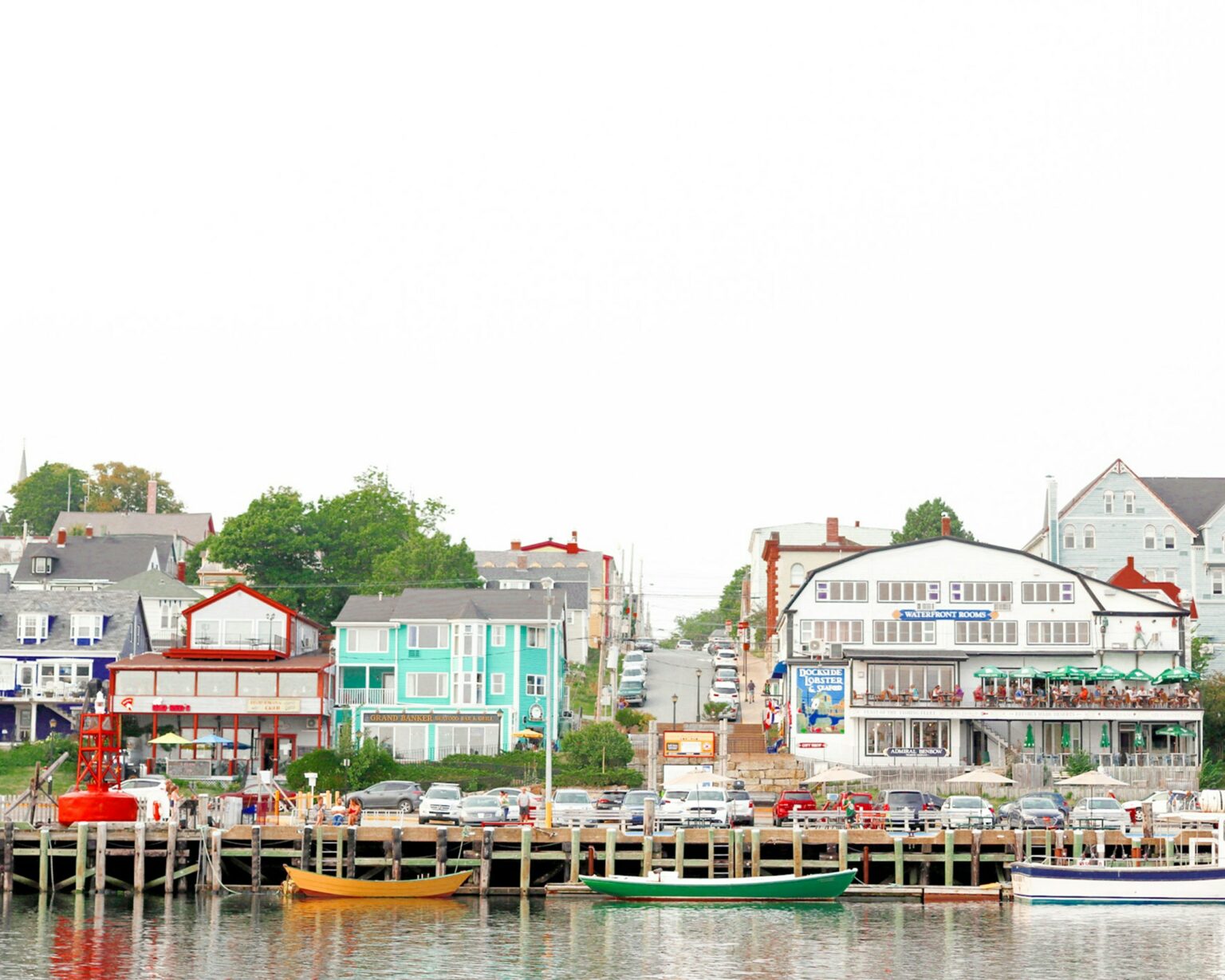
In provinces such as Nova Scotia, population growth has accelerated faster than housing supply, creating structural pressure rather than cyclical imbalance.
While this presents social challenges, it also creates predictability from an investment perspective. Demand is not speculative. It is driven by people needing somewhere to live.
Dubai, by contrast, can and does increase supply rapidly when demand rises, which limits long term scarcity.
Transparency, rule of law, and investor confidence
Canada operates under a common law system with a transparent land registry, clear title enforcement, and strong institutional oversight.
These characteristics rarely feature in marketing brochures, but they matter enormously in periods of uncertainty.
When markets tighten, capital gravitates towards jurisdictions where rules are stable, ownership is clear, and recourse is enforceable. This is particularly important for international investors who cannot manage assets locally.
Canada’s appeal is not excitement. It is reliability.
Yield versus risk adjusted return
Dubai often advertises higher headline yields than Canadian markets. The key word is headline.
When risk, volatility, vacancy cycles, regulatory changes, and resale uncertainty are factored in, risk adjusted returns can look very different.
Canadian markets may offer lower initial yields, but they tend to deliver steadier performance over longer horizons, supported by population growth and institutional stability.
In 2026, more investors are prioritising consistency over peaks.
Why the comparison matters now
The shift away from Dubai is not a rejection. It is a rebalancing.
Many investors still hold Dubai assets, but they are increasingly pairing them with exposure to more defensive markets. Canada fits naturally into that strategy.
As global uncertainty persists, portfolios that rely heavily on one region or one type of demand appear fragile. Diversification across fundamentally different markets has become a priority.
Nova Scotia as a case study
Nova Scotia illustrates why Canada’s regional markets are attracting attention.
Population growth, education, immigration pathways, and limited housing supply combine to create long term relevance without speculative excess. Entry prices remain relatively accessible, and demand is anchored in settlement rather than mobility.
This profile contrasts sharply with markets where value is driven primarily by sentiment and capital flows.
The investor mindset has changed
Perhaps the most important shift is psychological.
Investors in 2026 are not assuming that every market will recover quickly or that liquidity will always be available. Stress testing has returned to decision making.
Questions around downside protection, exit optionality, and legal certainty now carry as much weight as upside potential.
In that environment, Canada feels less exciting, but far more dependable.
Final perspective
Dubai property investment has not failed. It has matured.
As markets mature, returns compress, risk becomes more visible, and differentiation matters. Investors who once chased speed are now reassessing structure.
Canada offers a fundamentally different proposition. Population led demand, legal transparency, constrained supply, and long term settlement patterns create stability that is increasingly rare.
For investors looking beyond short cycles and headline yields, the shift from saturated, capital driven markets towards slower, structurally supported ones is not a trend. It is a recalibration.