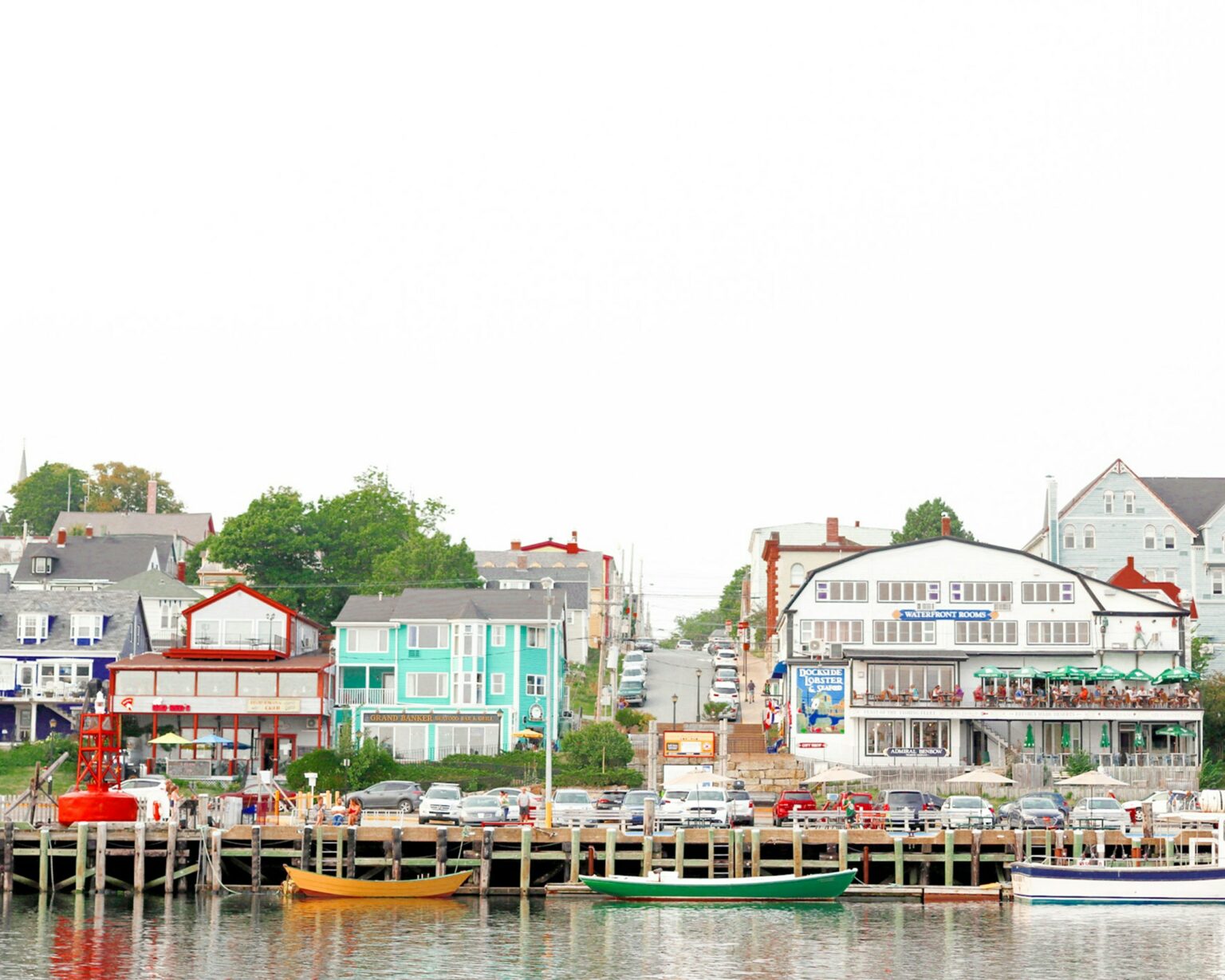
The Province That Rewrote the Playbook
For years, Canadian real estate conversations were dominated by two cities: Toronto and Vancouver. Investors chased prices upward in overheated markets, accepting razor-thin yields and hoping that capital appreciation alone would justify the entry cost. Meanwhile, quietly and without fanfare, a province on Canada’s Atlantic coast was building a case to become the country’s most compelling real estate story.
Nova Scotia — “New Scotland” — has undergone a remarkable transformation. Population growth has accelerated to levels not seen in modern history, infrastructure investment is reshaping connectivity across the province, and property values are rising on a foundation of genuine, structural demand rather than speculation. For land investors in particular, the fundamentals could hardly be stronger.
What makes Nova Scotia’s trajectory especially noteworthy is that it is not being driven by a single catalyst. This is not a tech-boom story or a speculative bubble inflated by cheap credit. It is the convergence of multiple, reinforcing trends — demographic shifts, government policy, affordability migration, and infrastructure modernisation — all pointing in the same direction.
The Numbers That Matter
Nova Scotia recorded its fastest population growth in modern history in recent years, adding nearly 30,000 new residents in a single year — a growth rate of over 3%. This is not a temporary blip. It is the result of sustained interprovincial migration from Ontario and British Columbia, where affordability has pushed families and professionals to seek alternatives, combined with strong international immigration and government incentive programmes designed to attract skilled workers and entrepreneurs.
The impact on housing is direct and measurable. Average home prices in Nova Scotia have seen over 50% growth since 2021, yet the province’s average price remains dramatically below national figures. According to the Canadian Real Estate Association, the average home price reached approximately $488,760 in mid-2025 — a 6.1% year-on-year increase at a time when national averages were stalling or declining. Where Ontario averages sit above $850,000 and British Columbia exceeds $950,000, Nova Scotia offers entry points that give investors significantly more purchasing power — and significantly more room for growth.
What this means in practical terms is striking. The same capital that might purchase a one-bedroom apartment in Toronto or Vancouver can often secure a detached home, resort lodge, or multiple development plots in Nova Scotia. For investors seeking value and upside rather than premium pricing and compressed yields, the arithmetic is compelling.
Why Land, and Why Now
The housing shortage across Nova Scotia is well documented. Bridgewater, one of the province’s key growth towns on the South Shore, is experiencing near-zero rental vacancy rates alongside population growth exceeding 7% since 2020. The imbalance between housing demand and available supply is creating direct, urgent need for new residential plots.
This is what makes raw land acquisition so strategically powerful in this market. Investors who secure shovel-ready residential plots today are positioning themselves at the base of the value chain — acquiring the essential ingredient that every developer, builder, and homebuyer needs. As construction catches up to demand, the value of buildable land rises in tandem.
The logic is straightforward: you cannot build a house without a plot to put it on. In a province where housing construction needs to accelerate dramatically to meet demand, the underlying land is the scarce resource. Owning that resource, in the right locations, is one of the most direct ways to participate in Nova Scotia’s growth story.
It is also worth noting that Nova Scotia’s housing undersupply is not a problem that will be solved quickly. Construction timelines, labour availability, and material costs all constrain the speed at which new homes can be delivered. This means the demand-supply imbalance is likely to persist for years, providing a sustained tailwind for land values in high-growth areas.
Infrastructure Is Accelerating the Opportunity
Provincial and federal governments have committed hundreds of millions of dollars to infrastructure improvements across Nova Scotia. A $583 million highway improvement programme is enhancing connectivity between communities, reducing travel times and opening up previously peripheral areas for development. These are not theoretical plans — they are funded, active projects that are already changing the province’s economic geography.
Perhaps most significantly, Nova Scotia is expected to deliver high-speed internet access to 99.99% of homes and businesses by 2026, making it one of the most digitally connected regions in North America. In an era where remote working has become a permanent feature of the employment landscape, this level of connectivity transforms the viability of smaller towns and rural areas as places to live and work.
These are not cosmetic upgrades. They are structural investments that make previously peripheral locations viable for residential development, remote working, and long-term habitation. For land investors, infrastructure spending is the clearest leading indicator of future value growth. When a government commits this level of capital to a region, it is a signal that the conditions for development and appreciation are being actively created.
Nova Scotia’s economy itself has diversified significantly in recent years. Historically reliant on shipbuilding and marine industries, the province has expanded into technology, education, healthcare, and clean energy. This economic broadening reduces dependence on any single sector and creates a more resilient foundation for sustained population and property market growth.
The Primefield Approach
At Primefield, we specialise in identifying, acquiring, and subdividing undervalued land in Nova Scotia’s highest-growth corridors. Our team conducts rigorous due diligence — legal, environmental, and zoning assessments — before acquiring parcels that are already zoned or approved for residential construction. We then create subdivision plans, register individual lots with the Land Registry and local municipality, and offer shovel-ready plots to domestic and international buyers.
This model allows investors to enter the Nova Scotia market at accessible price points while benefiting from the province’s structural growth trajectory. Every plot we offer comes with clear title, defined boundaries, and the confidence that it sits in a location where demand is real and growing.
Our process is systematic and repeatable. We are not speculating on which areas might grow — we are targeting locations where the growth is already measurable and the demand for housing is already acute. This discipline, combined with our team’s 75 years of combined experience in property sales, investment, and development consultancy, is what gives our investors confidence that their capital is deployed wisely.
Nova Scotia’s story is still being written, but the direction is clear. Population growth, infrastructure investment, housing demand, and affordability are all working in the same direction. For investors who recognise the opportunity and act while the market is still in its growth phase, the potential for meaningful returns is substantial.
Explore current land investment opportunities in Nova Scotia. Visit www.primefield.com or contact us to learn more.